
Jaw Joint Clicking and Popping: Why a Painless TMJ Click Should Not Be Ignored
Your jaw may click or pop without causing pain. Repeated joint sounds can reflect an altered relationship between the TMJ articular disc and the mandibular condyle, including disc displacement with reduction. Pain is not required for a structural joint problem to be present.
The type of sound, jaw movement, locking, and changes in the bite help distinguish disc-related clicking from grinding or crepitus that may involve the joint surfaces.
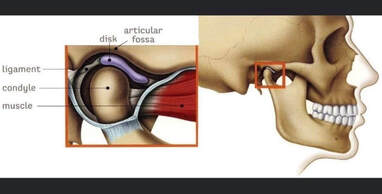
Can a TMJ problem exist if clicking does not hurt?
Yes. Disc displacement with reduction is a form of TMJ internal derangement. The disc may sit outside its usual functional relationship with the condyle and return to position during jaw opening, producing a click even when the joint is painless.
A lack of soreness does not confirm normal anatomy. New, repeated, or changing jaw clicking deserves attention, particularly when accompanied by catching, altered jaw motion, fatigue, or a bite that feels different.
What causes jaw clicking and popping?
In normal movement, the articular disc works with the condyle and temporal bone to guide motion and distribute joint forces. When the disc is displaced and then recaptured during opening, that change in contact can produce a distinct click or pop. A second sound may occur during closing.
Joint sounds also have other possible sources, so an examination is needed to determine whether disc displacement is likely. The timing of the noise, jaw deviation, range of opening, and other symptoms provide useful clues.
Normal TMJ vs. disc displacement: what changes?
These DENTOLOGY anatomical illustrations compare normal disc positioning with displacement relative to the mandibular condyle.
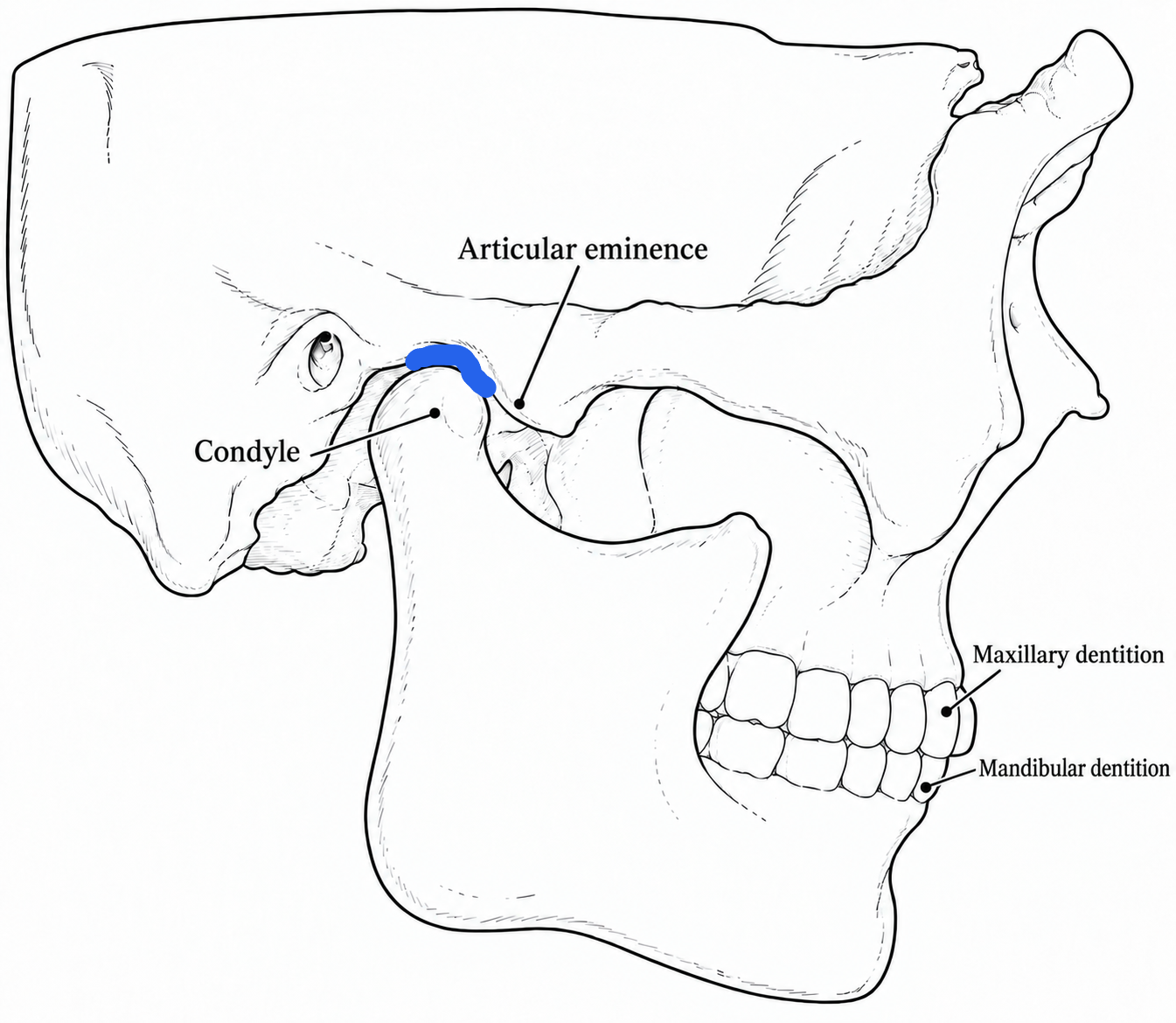
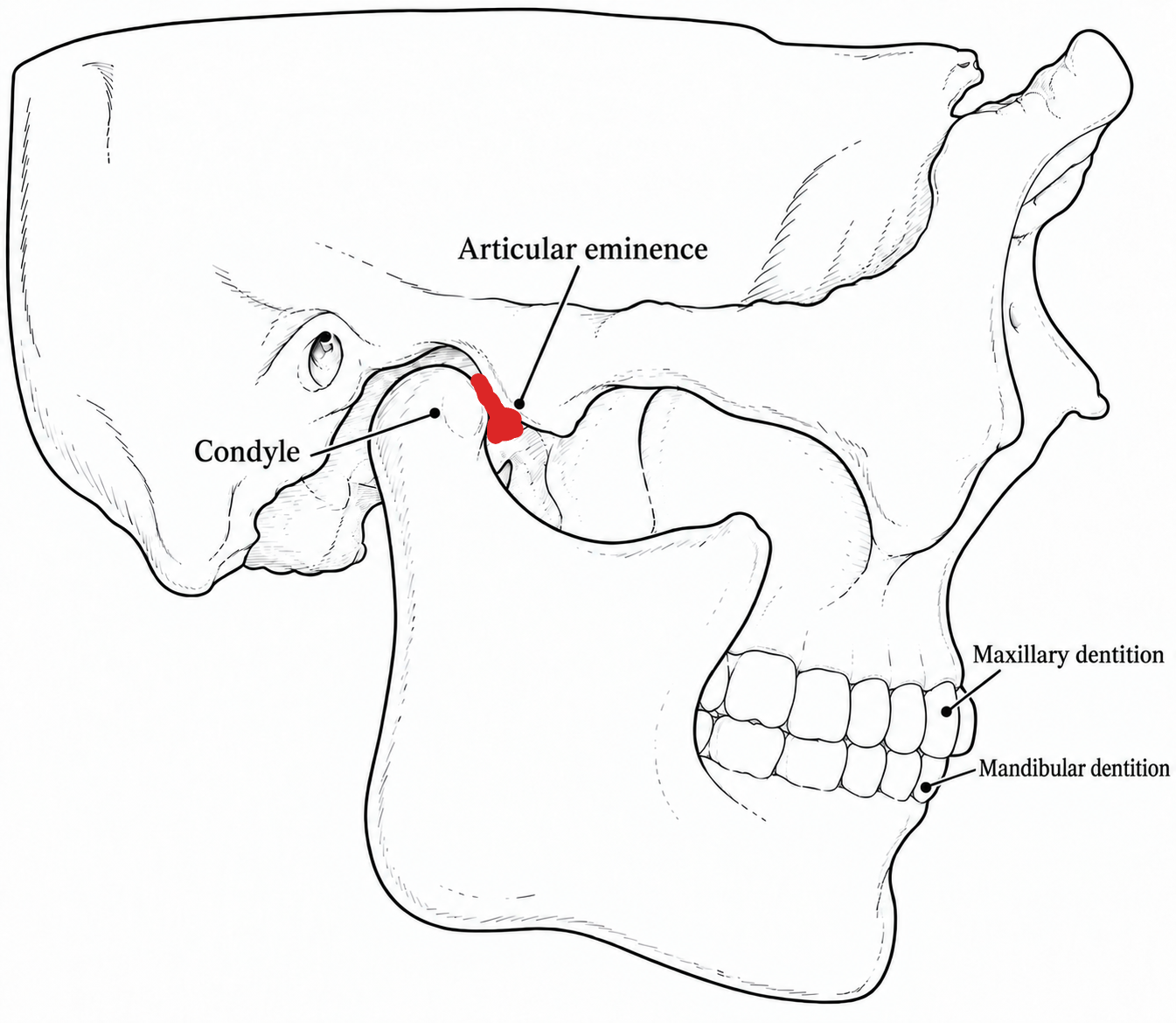
The illustrations demonstrate the structural relationship; they do not establish an individual diagnosis without a clinical examination.
Disc displacement with reduction: why does the click occur?
With disc displacement with reduction (DDWR), the disc is displaced in the closed-jaw position and is recaptured during movement. The recapture may be heard or felt as a click; another click can occur when the disc displaces again on closing.
This is a change in internal joint mechanics, whether or not pain is present. Examination findings determine whether further assessment, imaging, monitoring, or TMJ treatment is appropriate.
What if a clicking jaw stops clicking and begins to lock?
With disc displacement without reduction (DDWOR), the displaced disc does not return to its usual relationship with the condyle during opening. Patients may notice catching, a sudden reduction in mouth opening, or a closed-lock episode.
A previously noisy joint becoming quiet is not automatically improvement if the jaw now locks, opens less, deviates, or the bite changes. New or persistent limitation should be assessed promptly.
Which other symptoms may accompany TMJ disc problems?
Clicking may occur alongside joint, muscle, dental, or ear-related complaints. The pattern can include:
- Jaw fatigue, soreness, catching, locking, or limited opening
- Bite changes or uneven jaw movement
- Facial tension; temple, neck, or shoulder discomfort
- Headaches or migraines
- Ear pressure, fullness, pain, or tinnitus; dizziness or imbalance
- Daytime clenching, nighttime grinding, or worn, chipped, fractured, or sensitive teeth
These findings can coexist with TMD but do not establish that the TMJ is responsible for every symptom.
Can jaw-joint dysfunction be associated with headaches or migraines?
TMD can involve tenderness of the chewing muscles, temple discomfort, jaw fatigue, and headaches. Clenching or sustained muscle activity may make symptoms more noticeable, and migraine can coexist with jaw disorders.
When recurrent headaches occur with clicking, morning tightness, or neck tension, a jaw evaluation may be helpful. Read more about TMJ, headaches, and neck tension. Headache disorders still require their own clinical assessment.
What is the connection with ear pressure, tinnitus, or dizziness?
The TMJs lie immediately in front of the ears. Some patients with TMD also report ear pressure, fullness, otalgia, ringing, dizziness, imbalance, or vertigo. A jaw-related contribution may be considered when these symptoms change with chewing, clenching, or jaw movement.
Ear and balance complaints may instead arise from hearing disorders, vestibular conditions, migraine, medications, or other medical causes. Our TMJ and ear-symptom guide explains the differential evaluation. Sudden hearing loss or new neurological symptoms require urgent medical attention.
How do clenching, grinding, and tooth wear fit the picture?
Daytime clenching and sleep-related grinding can be associated with jaw muscle fatigue, morning tightness, temple pain, and substantial tooth wear. Cracked restorations, chipped teeth, and sensitivity may add important information about the forces affecting the teeth and jaw system.
Bruxism is not, by itself, proof that the disc is displaced. The assessment considers muscle function, joint sounds, jaw movement, and dental findings together. See tooth wear, fractures, sensitivity, and TMJ/TMD.
Clicking vs. crepitus: when are degenerative changes a concern?
A distinct click or pop often points toward altered disc mechanics, especially recapture during opening. Crepitus—coarse grinding, crunching, or a gravel-like noise—raises greater concern for changes in the bony articular surfaces, including degenerative joint disease (DJD) or TMJ osteoarthritis.
A sound alone cannot establish osteoarthritis, and not every click represents bony degeneration. Clinical findings and appropriate imaging distinguish these conditions. Learn more about TMJ osteoarthritis and degenerative joint disease.
How does a TMJ dentist evaluate clicking and disc displacement?
An evaluation begins with the history of joint sounds, locking, pain, onset, jaw movement, chewing function, bruxism, and bite changes. The clinician may assess opening range, deviations, joint palpation, muscle tenderness, occlusal contacts, and signs of tooth wear.
- MRI evaluates the articular disc and other soft tissues when indicated and can help characterize disc displacement with or without reduction.
- CBCT evaluates the bony structures of the TMJ, including remodeling or degenerative changes; it does not directly visualize the articular disc.
Imaging is selected according to clinical findings; not every patient needs both studies.
Why is it useful to evaluate a painless TMJ click early?
Documenting joint motion and the pattern of sounds may reveal problems that pain alone would miss. A TMJ examination becomes particularly important when clicking becomes frequent, the bite changes, jaw opening decreases, or the joint begins catching or locking.
The goal is to establish what is happening within the joint and choose proportionate follow-up or treatment based on the findings—not to assume that every sound requires the same intervention.
TMJ evaluation for jaw clicking in Boston and Woburn
Anton G. Andrews, DMD has more than 20 years of experience evaluating and treating TMJ/TMD. DENTOLOGY assesses jaw clicking, popping, possible disc displacement, bruxism, muscle symptoms, and changes in mandibular function.
When searching for a TMJ specialist near you in Boston, Brookline, Cambridge, or Somerville, look for an evaluation that addresses jaw clicking, popping, and suspected TMJ disc displacement. Our Boston TMJ/TMD treatment page explains the evaluation process.
The Woburn location also serves patients from Medford, Arlington, Lexington, Burlington, Winchester, Reading, Stoneham, and Wakefield. See our Woburn TMJ dentist page and North Shore TMJ/TMD treatment overview.
Boston, MA 02210
617-615-6040
Woburn, MA 01801
781-722-0270
Frequently asked questions about jaw clicking
Does painless clicking mean my TMJ is healthy?
No. A painless click may still reflect displaced-disc mechanics. An examination can determine whether clinically important dysfunction is present.
Is a disappearing click always good news?
No. If clicking stops while the jaw begins locking or opening less, disc displacement without reduction should be considered.
Does an MRI or CBCT show the displaced disc?
MRI is used for disc and soft-tissue assessment when indicated. CBCT shows bone and can help evaluate degenerative changes, not the disc itself.
Can clicking and crepitus mean different things?
Yes. Clicking commonly relates to disc movement, while coarse crepitus raises more concern for degenerative changes in the joint surfaces.

Step 1 · Contact details
Let’s get in touch
Tell us how to reach you. We’ll save your inquiry as you continue.
Final review · Consultation inquiry
Review your consultation
- Consultation
- Preferred office
The $275 consultation fee will be applied toward your implant treatment if you proceed with treatment.
The $275 New Patient Consultation includes a comprehensive dental examination, necessary diagnostic X-rays, and a review of findings and treatment recommendations. Cleaning is not included; it is determined and performed or scheduled separately based on clinical and periodontal needs.
If your dental insurance plan includes out-of-network benefits, DENTOLOGY will submit the applicable consultation services to your insurance carrier. Any reimbursement is determined by your individual plan and the carrier's policies.
Pay $275 Securely with SquareConsultation fee acknowledged
Thank you — your response has been recorded
No payment has been collected. The DENTOLOGY front desk can now follow up with you about scheduling the consultation.
Payment verified
Thank you for choosing DENTOLOGY and Dr. Anton Andrews
We appreciate the opportunity to help you. Your consultation payment has been confirmed, and our team will be glad to assist you with the concerns you shared.


