
Can TMJ and TMD Cause Ear Pain, Tinnitus, Pressure or Dizziness?
Ear pain, pressure, ringing, dizziness, or a clogged-ear feeling can be frustrating—especially when an ear examination does not reveal an infection or another obvious problem. In some patients, these symptoms may be associated with a temporomandibular disorder, commonly called TMD or TMJ disorder.
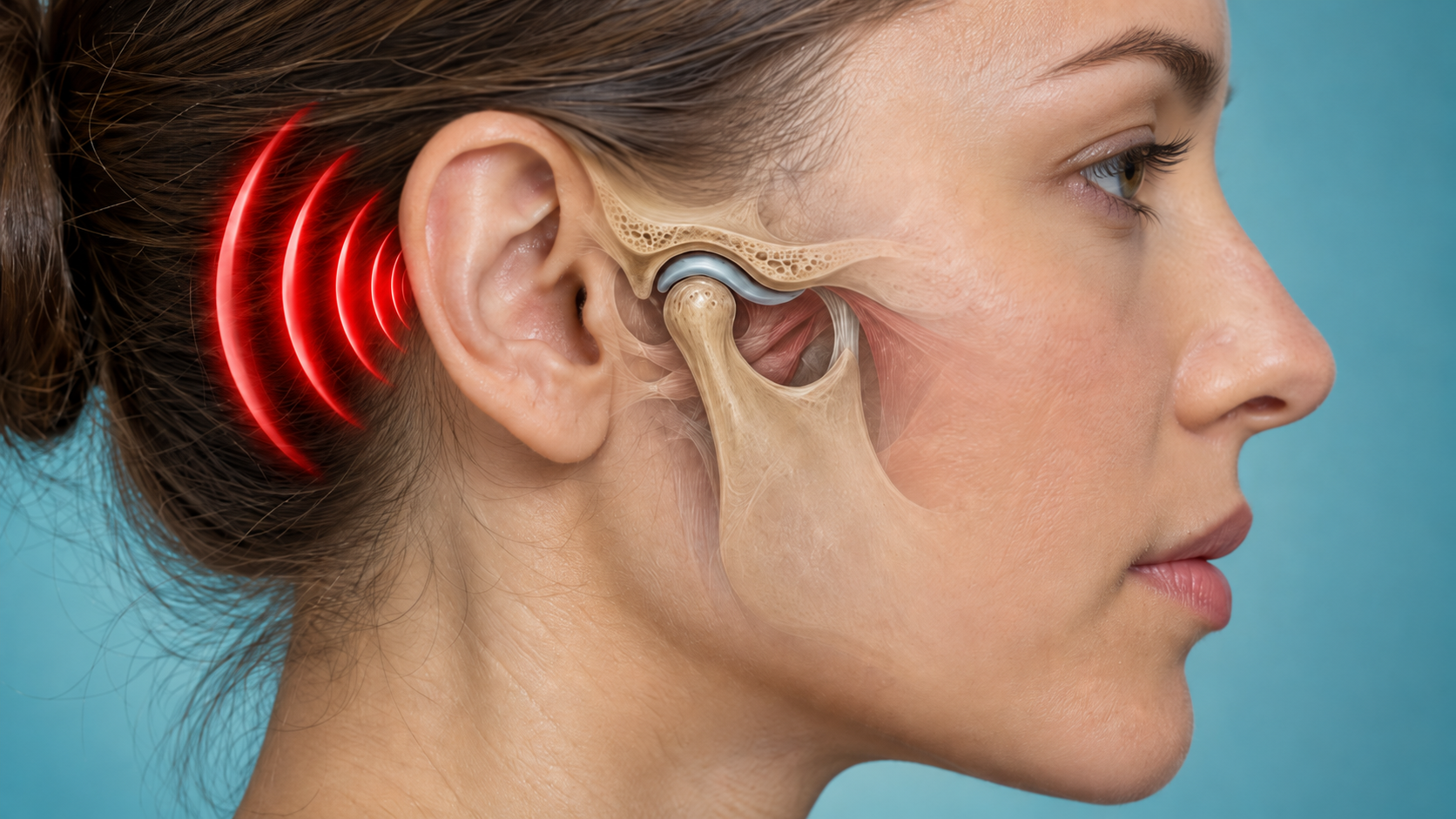
The temporomandibular joints are located directly in front of the ears and connect the lower jaw to the skull. Problems involving these joints, the chewing muscles, or jaw function can produce symptoms that are felt in and around the ears.
According to the National Institute of Dental and Craniofacial Research, symptoms associated with TMD may include jaw pain, limited jaw movement, painful clicking, ringing in the ears, hearing changes, and dizziness. However, ear-related symptoms can have many possible causes, so an appropriate medical or dental evaluation is important.
Can TMJ Cause Ear Pain?
Yes, a temporomandibular disorder can be associated with pain that feels as though it is coming from the ear. The jaw joint is located immediately in front of the ear canal, and pain from the TMJ or surrounding muscles may be felt near or inside the ear.
TMJ-related ear pain may be more likely when it occurs together with:
- Jaw pain or soreness
- Pain while chewing
- Tenderness in front of the ear
- Painful jaw clicking or popping
- Difficulty opening the mouth
- Jaw locking
- Facial pain or headaches
- Symptoms that become worse after clenching or prolonged chewing
Ear pain should not automatically be attributed to TMJ. Ear infections, sinus problems, dental infections, nerve-related pain, and other medical conditions must also be considered.
Ear Pain but No Ear Infection
Some patients visit an urgent-care center, primary-care physician, or ear, nose and throat specialist because of persistent ear pain. They may be told that the ear looks normal and that there is no infection.
When ear pain persists despite a normal ear examination, the jaw joint and chewing muscles may need to be evaluated—particularly if the patient also has jaw pain near the ear, painful clicking, restricted movement, headaches, facial pain, or a history of clenching.
A TMJ evaluation does not replace an appropriate medical or ENT examination. Its purpose is to determine whether a jaw-joint or muscle disorder may be contributing to the symptoms.
What Does TMJ Ear Pressure Feel Like?
TMJ ear pressure may feel like:
- Fullness or pressure inside the ear
- A clogged or blocked-ear sensation
- The need to “pop” the ear
- Discomfort in front of or below the ear
- Pressure that changes with chewing or jaw movement
- Ear symptoms accompanied by jaw tension or facial pain
Patients sometimes describe a persistent TMJ clogged-ear feeling even though no wax buildup, fluid, or infection has been identified.
Because ear fullness can also result from Eustachian-tube dysfunction, allergies, sinus conditions, inner-ear disorders, or hearing problems, persistent pressure should be evaluated rather than assumed to be caused by TMJ.
TMJ and Tinnitus
Tinnitus is the perception of sound when no external sound is present. It may be experienced as ringing, buzzing, humming, clicking, or another sound in one or both ears.
Research has identified an association between tinnitus and temporomandibular disorders, but this does not mean that every case of tinnitus is caused by TMJ. Tinnitus may also be related to hearing loss, noise exposure, medication effects, ear disease, neurological conditions, or other health problems.
TMJ involvement may deserve consideration when tinnitus occurs together with:
- Jaw-joint or chewing-muscle pain
- Painful clicking or popping
- Clenching or grinding
- Limited or uneven jaw movement
- Facial pain
- Headaches
- A change in tinnitus during jaw movement or clenching
A comprehensive evaluation is needed to determine whether the jaw may be one of the factors associated with the patient’s symptoms.
Can TMJ Cause Ringing in the Ears?
Ringing in the ears is one of the symptoms reported by some people with temporomandibular disorders. The relationship is not identical in every patient, and TMJ treatment cannot be expected to resolve all cases of tinnitus.
Patients with new or persistent ringing should consider a medical or audiological evaluation to rule out hearing loss and other ear-related conditions. If ringing is accompanied by jaw pain, pressure near the ear, headaches, painful joint sounds, or impaired jaw movement, a TMJ evaluation may also be appropriate.
TMJ Dizziness and Vertigo
Dizziness is a broad term that may describe lightheadedness, imbalance, unsteadiness, or a spinning sensation. True vertigo generally refers to the feeling that you or your surroundings are moving or spinning.
Dizziness has been reported among patients with TMD, but vertigo and balance problems can have many other causes, including inner-ear disorders, neurological conditions, medication effects, cardiovascular problems, and dehydration.
For that reason, dizziness or vertigo should not be diagnosed as a TMJ problem based on symptoms alone. Medical evaluation is particularly important when symptoms are new, severe, recurrent, or accompanied by hearing changes or neurological symptoms.
Once urgent and primary medical causes have been considered, a TMJ assessment may be helpful when dizziness occurs together with jaw pain, painful joint noises, facial pain, clenching, restricted jaw movement, or pressure around the ears.
Why Ear Fullness or Dizziness May Be Worse in the Morning
Some patients notice ear fullness, pressure, jaw tightness, headache, or a sense of imbalance most strongly after waking. One possible explanation is overnight clenching or grinding, which can increase loading of the chewing muscles, teeth, and temporomandibular joints. Morning symptoms become more suggestive of a jaw-related contribution when they occur together with jaw fatigue, temple soreness, tooth wear, tenderness near the TMJs, or a change in symptoms with jaw movement.
Morning ear pressure or dizziness should not automatically be labeled as TMJ/TMD. Inner-ear and hearing disorders, medication effects, dehydration, migraine, cardiovascular causes, and other conditions can produce similar symptoms. If tooth wear, fractures, or clenching are part of the pattern, see our related article on tooth wear, fractures, and TMJ/TMD. Patients with recurring headaches or neck tension may also find our overview of TMJ, headaches, and neck tension helpful.
TMJ Ear Pressure vs. Ear and Inner-Ear Conditions
TMJ-related ear pressure can overlap with symptoms from Eustachian-tube dysfunction, ear infection, hearing disorders, and vestibular conditions. The pattern matters. Jaw-related symptoms are more suspicious when pressure changes with chewing, clenching, wide opening, or jaw movement and occurs with jaw pain, clicking, locking, muscle tenderness, or bite changes.
By contrast, episodes of vertigo accompanied by tinnitus, fluctuating hearing loss, and ear fullness can occur with Ménière’s disease, which is an inner-ear disorder and requires medical evaluation. Sudden hearing loss—especially when accompanied by ear fullness, dizziness, or tinnitus—also warrants prompt medical attention rather than being assumed to come from the jaw.
Structural TMJ problems can also contribute to pain and altered function in selected patients. For more background on joint degeneration and imaging findings, see our article on TMJ osteoarthritis and degenerative joint disease.
Does TMJ-Related Ear Fullness Go Away?
There is no single timeline because “ear fullness” is a symptom with several possible causes. When a jaw-joint or muscle disorder is contributing, improvement depends on identifying and managing the underlying mechanical or muscular problem rather than treating the ear sensation in isolation. Persistent, worsening, one-sided, or hearing-related symptoms should be evaluated medically when appropriate.
Jaw Pain Near the Ear
Jaw pain near the ear is a common reason patients seek a TMJ evaluation. The discomfort may originate from the jaw joint, the surrounding muscles, or another nearby structure.
Possible signs of a temporomandibular disorder include:
- Pain directly in front of the ear
- Pain when biting or chewing
- Jaw stiffness, especially after waking
- Painful clicking, popping, or grinding
- Limited mouth opening
- Jaw deviation during opening
- Episodes of locking
- Headaches or facial pain
- Changes in the way the teeth meet
- Ear pressure, tinnitus, or dizziness occurring with jaw symptoms
A painless click without other symptoms is common and does not necessarily require treatment. Pain, restricted movement, locking, or a change in function is more significant and should be assessed.
How Are TMJ-Related Ear Symptoms Evaluated?
There is no single test that determines whether an ear symptom is related to TMD. A comprehensive evaluation may include:
- A detailed history of the jaw and ear symptoms
- Examination of the temporomandibular joints
- Evaluation of jaw movement and range of motion
- Examination of the chewing and facial muscles
- Assessment of painful joint sounds or locking
- Review of the bite and jaw function
- Dental imaging when clinically necessary
- Referral for medical, ENT, audiological, or neurological evaluation when appropriate
The objective is not simply to label ear symptoms as “TMJ.” It is to identify whether a specific jaw-joint, muscle, or functional problem is present and whether it may be associated with the patient’s symptoms.
When Tinnitus Changes With Jaw or Neck Movement
In some people, tinnitus changes temporarily with clenching, opening the mouth, moving the jaw, turning the neck, or pressing on certain chewing or neck muscles. This pattern is often described as somatosensory modulation. It can be a useful clinical clue that jaw, facial, or cervical sensory input is interacting with auditory pathways, but it does not prove that TMD is the sole cause of the tinnitus.
A TMJ/TMD evaluation may be especially relevant when modulated tinnitus occurs together with jaw pain, clicking or locking, limited opening, morning jaw fatigue, headaches, facial or neck tension, clenching or grinding, or a bite that has recently changed.
Bruxism, Posterior Tooth Support and Bite Changes
Clenching and grinding can overload the teeth, chewing muscles, and temporomandibular joints. Worn teeth, fractured molars or restorations, missing back teeth, altered posterior contacts, or a progressive change in the bite may therefore be important findings during a TMJ assessment. These findings should be interpreted as part of the overall joint, muscle, and mandibular-function pattern rather than as proven direct causes of tinnitus.
Orthodontic history can also provide context when symptoms began around a period of changing dental contacts or retention. Current evidence does not support the broad claim that orthodontic treatment generally causes TMD or tinnitus, so timing and individual examination findings matter.
What If an ENT Examination Is Normal?
If appropriate ear and hearing causes have been evaluated and tinnitus remains unexplained, a TMJ/TMD assessment can be reasonable when jaw symptoms or jaw-dependent changes in the tinnitus are also present. A dental evaluation should complement, not replace, medical or audiologic care.
Useful background resources include the National Institute on Deafness and Other Communication Disorders tinnitus overview, the National Institute of Dental and Craniofacial Research TMD overview, and peer-reviewed literature on somatosensory tinnitus.
When Should You Seek Immediate Medical Care?
Seek prompt medical attention for:
- Sudden hearing loss, particularly in one ear
- Severe or rapidly worsening dizziness
- New weakness, numbness, confusion, or difficulty speaking
- Fainting
- Severe headache with neurological symptoms
- Ear drainage, significant swelling, or high fever
- Chest pain or shortness of breath
Sudden hearing loss can be a medical emergency and should not be assumed to be caused by TMJ.
TMJ and Ear-Symptom Evaluation at Dentology
At Dentology, Dr. Anton Andrews has more than 20 years of experience in the field of TMJ/TMD evaluation and treatment. Our approach begins with a careful assessment of the jaw joints, chewing muscles, mandibular movement, bite, and overall jaw function.
When appropriate, we coordinate care with physicians, ENT specialists, audiologists, physical therapists, or other healthcare professionals. Treatment recommendations are based on the findings of the examination and the individual patient’s condition.
If you are experiencing ear pain but no ear infection, TMJ ear pressure, tinnitus, a clogged-ear feeling, dizziness, vertigo, or jaw pain near the ear, learn about a Boston TMJ/TMD evaluation with Anton G. Andrews, DMD, or visit our Woburn TMJ/TMD treatment page.
Dentology Boston
330 Congress Street
Boston, MA 02210
Phone: 617-615-6040
View the Boston location on Google Maps
Dentology Woburn
444 Washington Street, Suite 301
Woburn, MA 01801
Phone: 781-722-0270
View the Woburn location on Google Maps
Dentology serves patients from Boston, Woburn, Winchester, Burlington, Reading, Stoneham, Wakefield, Wilmington, North Reading, Lexington, Bedford, and surrounding Massachusetts communities.

Step 1 · Contact details
Let’s get in touch
Tell us how to reach you. We’ll save your inquiry as you continue.
Final review · Consultation inquiry
Review your consultation
- Consultation
- Preferred office
The $275 consultation fee will be applied toward your implant treatment if you proceed with treatment.
The $275 New Patient Consultation includes a comprehensive dental examination, necessary diagnostic X-rays, and a review of findings and treatment recommendations. Cleaning is not included; it is determined and performed or scheduled separately based on clinical and periodontal needs.
If your dental insurance plan includes out-of-network benefits, DENTOLOGY will submit the applicable consultation services to your insurance carrier. Any reimbursement is determined by your individual plan and the carrier's policies.
Pay $275 Securely with SquareConsultation fee acknowledged
Thank you — your response has been recorded
No payment has been collected. The DENTOLOGY front desk can now follow up with you about scheduling the consultation.
Payment verified
Thank you for choosing DENTOLOGY and Dr. Anton Andrews
We appreciate the opportunity to help you. Your consultation payment has been confirmed, and our team will be glad to assist you with the concerns you shared.


