
TMJ Osteoarthritis and Degenerative Joint Disease: Expert Treatment for Severe and Complex Cases
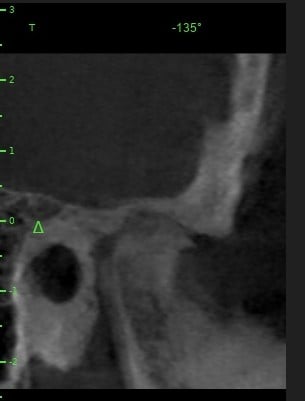
Temporomandibular joint osteoarthritis—also known as TMJ degenerative joint disease or TMJ DJD—is a condition involving progressive structural changes within the jaw joint. It can cause persistent jaw pain, joint stiffness, grinding or crunching sounds, restricted mouth opening, jaw locking, and changes in the way the teeth fit together.
At DENTOLOGY, Dr. Anton Andrews provides advanced evaluation and individualized treatment for TMJ osteoarthritis, degenerative joint disease, disc displacement, idiopathic condylar resorption (ICR), and other severe or complex temporomandibular disorders.
With more than 20 years of experience in the field of TMJ treatment, Dr. Andrews has particular expertise in treating complicated cases, including patients with advanced joint changes, persistent symptoms, previous unsuccessful TMD treatments, progressive bite changes, or concerns about undergoing TMJ surgery.
His treatment philosophy prioritizes minimally invasive, conservative, and reversible methods whenever clinically appropriate. This individualized approach has produced a high clinical success rate, including in many patients with complex TMJ conditions and previous treatment failures.
Consultations are available at DENTOLOGY locations in Boston’s Seaport District and Woburn, Massachusetts.
What Is TMJ Degenerative Joint Disease?
The temporomandibular joints connect the lower jaw to the skull and allow the jaw to open, close, and move during speaking and chewing.
TMJ degenerative joint disease occurs when the cartilage, bone, and other internal structures of the joint undergo deterioration or remodeling. The condition may be described as:
- TMJ osteoarthritis
- Degenerative arthritis of the TMJ
- Degenerative joint disease
- Condylar degeneration
- TMJ arthrosis
- Advanced internal joint derangement
These terms may describe related conditions, but they are not always interchangeable. An accurate diagnosis is essential because osteoarthritis, disc displacement, inflammatory arthritis, trauma, and idiopathic condylar resorption may require different clinical considerations and treatment strategies.
Symptoms of TMJ Osteoarthritis
TMJ osteoarthritis does not affect every patient in the same way. Some people have significant structural changes visible on imaging but relatively mild symptoms. Others experience substantial pain, bite changes, and loss of jaw function.
Possible symptoms include:
- Persistent pain in one or both jaw joints
- Pain directly in front of the ear
- Grinding, grating, or crunching sounds called crepitus
- Clicking or popping within the jaw joint
- Jaw stiffness, especially in the morning
- Limited or painful mouth opening
- Pain or fatigue while chewing
- Jaw locking or catching
- Facial pain or headaches
- Ear pressure, tinnitus, or dizziness
- Changes in the bite
- Progressive facial or jaw asymmetry
- A sensation that the lower jaw has shifted backward
- Reduced ability to eat comfortably
Painless clicking alone is common and does not necessarily indicate osteoarthritis. However, persistent pain, crepitus, limited movement, jaw locking, or a changing bite should be evaluated.
Dr. Anton Andrews’ Expertise in Complex TMJ Cases
Many patients come to DENTOLOGY after months or years of unresolved jaw pain. Some have already tried night guards, oral appliances, Botox, physical therapy, medications, orthodontic treatment, or other procedures without lasting improvement.
Dr. Anton Andrews has more than 20 years of experience in the field of TMJ treatment. His expertise includes evaluating the relationship between joint structure, disc position, mandibular movement, muscle function, bite changes, and occlusal stability.
Dr. Andrews regularly evaluates patients with:
- Advanced TMJ osteoarthritis
- Degenerative joint disease
- Disc displacement
- Idiopathic condylar resorption
- Condylar degeneration or resorption
- Severe restriction or locking of the jaw
- Progressive bite changes
- Facial or mandibular asymmetry
- Persistent symptoms after previous TMJ treatment
- Unsuccessful night-guard or oral-appliance therapy
- Symptoms that developed or continued after orthodontic treatment
- Questions about a previous TMJ diagnosis
- Recommendations for TMJ procedures or surgery
- Ongoing symptoms following a TMJ procedure
A previous treatment failure does not necessarily mean that every conservative option has been exhausted. It may indicate that the underlying condition, diagnosis, appliance design, treatment objective, or relationship between joint function and mandibular stability requires further evaluation.
Why Severe TMJ Disorders Require a Detailed Evaluation
Advanced TMJ disorders cannot be understood by looking at only one symptom or one image. Joint structure, disc position, mandibular movement, muscle function, occlusion, bite changes, and the patient’s complete treatment history must be considered together.
Dr. Andrews’ evaluation of a complex TMJ case may include:
- A detailed review of current and previous symptoms
- Evaluation of prior night guards, orthotics, Botox, physical therapy, dental treatment, or surgery
- Assessment of jaw opening and mandibular movement
- Examination of the temporomandibular joints and chewing muscles
- Evaluation of clicking, popping, crepitus, and joint tenderness
- Analysis of the patient’s bite and jaw function
- Review of changes in occlusion or mandibular position
- Appropriate diagnostic imaging
- Comparison with previous scans when available
CBCT imaging can help identify bony changes such as flattening, erosion, sclerosis, osteophytes, and changes in condylar shape. MRI may be recommended when evaluation of disc displacement, inflammation, or other soft-tissue structures is necessary.
Dr. Andrews interprets imaging findings together with the clinical examination, functional evaluation, symptoms, and treatment history. A scan alone does not identify the source of every symptom or determine the appropriate treatment.
Minimally Invasive Treatment for TMJ Osteoarthritis
There is no single treatment protocol appropriate for every patient with TMJ degenerative joint disease. Treatment depends on the diagnosis, stage of the condition, current symptoms, functional limitations, joint stability, bite changes, previous treatment, and overall clinical presentation.
Dr. Andrews prioritizes minimally invasive, conservative, and reversible treatment whenever clinically appropriate. The objective is to address the patient’s specific joint and functional condition while avoiding unnecessary irreversible procedures.
Treatment may focus on:
- Reducing stress on painful or vulnerable joint structures
- Improving mandibular stability and function
- Managing muscle overactivity and protective muscle tension
- Supporting a more comfortable range of motion
- Reducing aggravating habits and excessive joint loading
- Using a carefully designed removable TMJ orthotic when indicated
- Monitoring changes in symptoms, movement, function, and bite
- Coordinating care with physical therapists, physicians, or other specialists when appropriate
- Reevaluating the condition and modifying treatment as needed
Dr. Andrews’ experience treating severe and previously unsuccessful cases allows him to develop individualized treatment plans rather than relying on a generic night guard or standardized protocol.
His minimally invasive approach has achieved a high clinical success rate, including in many patients with complicated TMJ histories. Individual results may vary depending on the diagnosis, severity of structural damage, duration of the condition, and other clinical factors.
Is a TMJ Orthotic the Same as a Night Guard?
No. A conventional night guard is usually designed primarily to protect the teeth from wear caused by clenching or grinding. A TMJ orthotic may have a different design, function, and clinical objective.
For a patient with degenerative joint disease, disc displacement, or another complex TMJ condition, an appliance should not be selected solely because the patient grinds their teeth. The joint condition, mandibular position, movement, muscles, bite, and treatment objectives must be evaluated before an appliance is prescribed.
An improperly designed or poorly monitored appliance may fail to control symptoms and may contribute to unwanted bite changes. Patients who experience increasing pain, restricted movement, or a changing bite while wearing an appliance should be reevaluated.
Treatment After Previous Unsuccessful TMJ Care
Patients with complex TMJ disorders frequently arrive at DENTOLOGY after trying several treatments without sufficient improvement.
Previous treatment may have included:
- Over-the-counter night guards
- Custom dental night guards
- Oral orthotics or splints
- Physical therapy
- Botox injections
- Pain or anti-inflammatory medications
- Chiropractic care
- Orthodontic treatment
- Dental restorations
- Arthrocentesis or another TMJ procedure
Dr. Andrews reviews what was previously attempted, how the patient responded, whether the diagnosis was adequately established, and whether the prior treatment addressed the complete functional condition.
The purpose is not simply to repeat another appliance or symptom-based treatment. It is to identify why the condition remains unresolved and determine whether a different minimally invasive and individualized approach may be appropriate.
When Should TMJ Surgery Be Considered?
Most patients should begin with conservative care when clinically appropriate. Surgery may be considered in selected cases involving severe structural destruction, major functional impairment, or persistent symptoms that have not responded to suitable nonsurgical treatment.
If surgery has been recommended, a comprehensive second opinion with Dr. Andrews can help clarify:
- The specific diagnosis
- The extent of structural joint damage
- Whether the condition appears stable or progressive
- Which conservative treatments have already been attempted
- Why previous treatment may not have succeeded
- Whether additional minimally invasive treatment may be appropriate
- The proposed procedure’s objectives, limitations, and risks
- Whether referral to an oral and maxillofacial surgeon is indicated
DENTOLOGY provides second-opinion evaluations for patients considering arthrocentesis, arthroscopy, open-joint surgery, or total joint replacement.
When surgical management is necessary, Dr. Andrews can help the patient understand the diagnosis and coordinate care with the appropriate specialist. When a conservative alternative remains appropriate, his objective is to pursue the least invasive effective approach before irreversible treatment is considered.
Can TMJ Degeneration Change the Bite?
Structural changes in the mandibular condyle can affect the position and movement of the lower jaw. Depending on the location and extent of those changes, a patient may notice that the teeth no longer meet in the same way.
Possible changes include:
- Development of an open bite
- Increasing overjet
- Uneven contact between the right and left sides
- A shift in the lower jaw
- Progressive facial asymmetry
- Difficulty finding a stable or comfortable bite
- A sensation that the lower jaw has moved backward
A changing bite—especially when accompanied by pain, joint noises, restricted movement, or facial changes—should not be treated as a routine dental problem without first evaluating the temporomandibular joints.
When to Schedule a TMJ Evaluation
Consider scheduling a comprehensive evaluation with Dr. Andrews if you have:
- Persistent or worsening pain in front of the ear
- Clicking, popping, grinding, or crunching inside the jaw joint
- Increasing difficulty opening your mouth
- A jaw that repeatedly locks or catches
- A bite that has recently changed
- Facial or mandibular asymmetry that appears to be progressing
- A diagnosis of TMJ osteoarthritis or degenerative joint disease
- A diagnosis of disc displacement or idiopathic condylar resorption
- Symptoms that continued despite previous TMJ treatment
- A night guard or appliance that has not helped
- A recommendation for TMJ surgery and would like a second opinion
Sudden facial weakness, significant swelling, fever, recent serious trauma, or neurological symptoms require prompt medical evaluation.
TMJ Osteoarthritis and Complex TMJ Treatment in Boston
At DENTOLOGY Boston, Anton G. Andrews, DMD provides TMJ/TMD evaluation in Boston for patients with osteoarthritis, degenerative joint disease, disc disorders, bite changes, and other complex temporomandibular conditions.
DENTOLOGY Boston
330 Congress Street
Boston, MA 02210
Phone: 617-615-6040
Visits by appointment
TMJ Osteoarthritis and Complex TMJ Treatment in Woburn
The Woburn location provides convenient access for patients from Woburn, Winchester, Burlington, Reading, Stoneham, Wakefield, Wilmington, North Reading, Lexington, Bedford, the North Shore, and northern Greater Boston.
DENTOLOGY Woburn
444 Washington Street, Suite 301
Woburn, MA 01801
Phone: 781-722-0270
Visits by appointment
Schedule a Consultation with Dr. Anton Andrews
Severe TMJ pain, degenerative joint disease, disc displacement, ICR, and progressive bite changes require more than a generic night guard or symptom-based treatment.
With more than 20 years of experience in the field of TMJ treatment, Dr. Anton Andrews provides detailed evaluation and individualized treatment planning for advanced TMJ osteoarthritis, complex TMD histories, and previous unsuccessful treatments.
His approach prioritizes minimally invasive, conservative, and reversible methods whenever clinically appropriate and has achieved a high clinical success rate in the treatment of many severe and complex TMJ cases.
Dr. Andrews also provides second-opinion consultations for patients who have been advised to consider TMJ surgery.
For care in the Seaport District, visit our Boston TMJ/TMD treatment page. Patients north of Boston can use our Woburn TMJ/TMD page.
Frequently Asked Questions
Is TMJ osteoarthritis the same as TMD?
No. TMD is a broad term covering many disorders involving the jaw joints, chewing muscles, and related structures. TMJ osteoarthritis is a specific joint disorder characterized by degenerative structural changes.
Does Dr. Andrews treat severe and complex TMJ cases?
Yes. Dr. Andrews has more than 20 years of experience in the field of TMJ treatment and regularly evaluates patients with osteoarthritis, degenerative joint disease, disc displacement, ICR, progressive bite changes, restricted jaw movement, previous treatment failures, and recommendations for TMJ surgery.
What is Dr. Andrews’ approach to TMJ treatment?
Dr. Andrews prioritizes minimally invasive, conservative, and reversible treatment whenever clinically appropriate. Treatment is individualized according to the patient’s diagnosis, joint condition, mandibular function, muscles, bite, imaging, symptoms, and previous treatment history.
Does Dr. Andrews have experience treating patients whose previous TMJ treatment failed?
Yes. Many patients visit DENTOLOGY after trying night guards, oral appliances, physical therapy, Botox, medications, orthodontic treatment, or TMJ procedures without sufficient improvement. Dr. Andrews evaluates why symptoms remain unresolved before developing a new treatment plan.
Can TMJ osteoarthritis be seen on an X-ray?
Certain bone changes may be visible on dental radiographs, but CBCT generally provides more detailed three-dimensional information about the bony joint structures. MRI may be needed to evaluate the disc and other soft tissues.
Can TMJ osteoarthritis cause ear symptoms?
TMD may be associated with ear-area pain, pressure, tinnitus, or dizziness. Because these symptoms can also have non-TMJ causes, appropriate medical or hearing evaluation may be necessary.
Does every patient with TMJ degeneration need surgery?
No. Surgery is generally reserved for selected patients with severe structural damage, significant functional impairment, or symptoms that persist despite appropriate nonsurgical care. Dr. Andrews prioritizes conservative and minimally invasive treatment when clinically appropriate.
Can I get a second opinion before TMJ surgery?
Yes. Dr. Andrews evaluates patients who have been advised to undergo TMJ procedures or surgery. The consultation can review the diagnosis, imaging, previous treatments, and possible conservative alternatives before the patient makes an irreversible decision.
What should I bring to my consultation?
Bring any previous CBCT scans, MRIs, X-rays, treatment records, and oral appliances if available. A timeline of your symptoms and previous treatments can also be helpful.