
Do you wake up with jaw stiffness, frequent headaches, or tightness in your neck and shoulders? Many patients are surprised to learn that these symptoms may be connected to a condition called TMJ disorder (also known as TMD).
At Dentology Boston, we help patients uncover the real cause of chronic jaw pain and provide advanced, personalized TMJ treatment in Boston designed to restore comfort and balance.
What Is TMJ and Why Does It Matter?
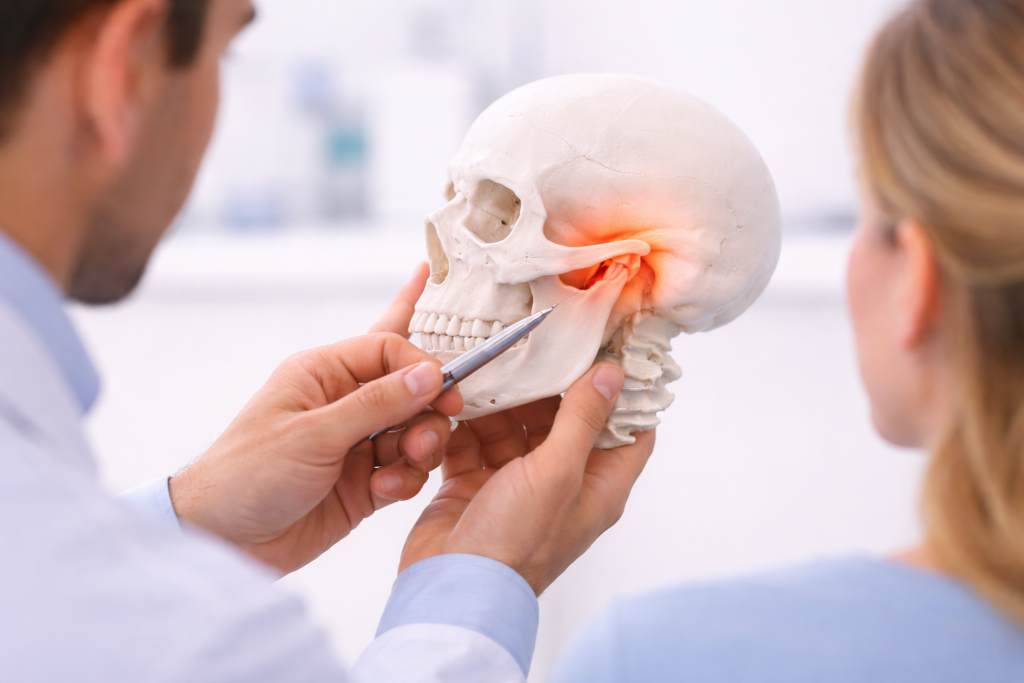
The temporomandibular joints (TMJ) connect your lower jaw to your skull. These joints work constantly — when you chew, speak, yawn, or even swallow. When they become inflamed, misaligned, or overworked, the result can be widespread discomfort.
Because the jaw is closely connected to facial muscles, nerves, and the cervical spine, TMJ dysfunction often affects more than just the jaw itself.
Common Symptoms of TMJ Disorder
TMJ problems don’t always feel like “dental” issues. Many patients first seek help for other symptoms, including:
- Persistent headaches or migraines
- Jaw clicking, popping, or locking
- Facial pain or pressure
- Neck and shoulder tension
- Ear pain or ringing (tinnitus)
- Difficulty chewing or opening the mouth fully
- Morning jaw soreness from clenching or grinding
If these symptoms sound familiar, your jaw may be the underlying cause.
Why Jaw Pain and Headaches Are Often Connected
The jaw joint sits close to major nerves and muscles that influence the head and neck. When the TMJ is strained — due to teeth grinding (bruxism), bite misalignment, stress, or injury — it can create muscle tension that radiates outward.
Over time, this tension can:
- Trigger tension-type headaches
- Contribute to migraines
- Cause chronic neck stiffness
- Create shoulder tightness
Treating the jaw imbalance can significantly reduce these secondary symptoms.
What Causes TMJ Dysfunction?
Several factors may contribute to TMJ problems:
- Teeth grinding or clenching
- Bite misalignment
- Missing teeth or poorly fitted restorations
- Trauma to the jaw
- Chronic stress
- Inflammatory conditions
A comprehensive evaluation is essential to determine the root cause rather than simply treating the symptoms.
How TMJ Treatment in Boston Can Help
At Dentology Boston, TMJ treatment focuses on restoring balance, reducing inflammation, and protecting the joint from further strain.
Depending on your condition, treatment may include:
- Custom oral appliances to reduce grinding and clenching
- Bite stabilization therapy
- Muscle relaxation strategies
- Advanced diagnostics to assess jaw alignment
- Collaborative care when needed
Our approach is conservative, precise, and designed to relieve pain while protecting long-term oral health.
When to Seek Professional Help
If jaw pain, headaches, or neck tension are interfering with your daily life — especially if over-the-counter solutions aren’t working — it’s time for a professional evaluation.
Early treatment can prevent:
- Chronic pain cycles
- Tooth damage from grinding
- Progressive joint deterioration
- Long-term muscle dysfunction
Personalized TMJ Care in Boston
You don’t have to live with daily discomfort. Many patients experience significant improvement once the true cause of their pain is identified and properly treated.
If you’re searching for TMJ treatment in Boston, our team at Dentology Boston is here to help you find clarity, relief, and long-term stability.
Schedule a consultation today and take the first step toward a pain-free, balanced smile.